
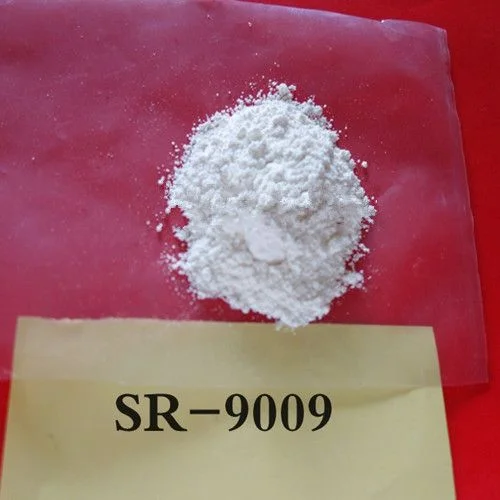
SR9009 Powder for Sale – Lab-Tested Stenabolic Powder
Price range: $900.00 through $11,400.00
we provide premium SR9009 powder (Stenabolic), a cutting-edge research chemical known for its ability to enhance endurance, promote fat loss, and improve metabolic function. Our SR9009 powder is thoroughly lab-tested to ensure a minimum 99% purity, providing a reliable and potent product for athletes, bodybuilders, and fitness enthusiasts aiming to optimize their physical performance and physique.
Lab-Tested Quality: Guaranteed 98%+ purity and verified for safety.
Bulk Pricing Available: Order now and enjoy competitive bulk pricing with fast, discreet shipping.
Guaranteed Safe Delivery: If your package is seized or doesn’t arrive, we will resend it at no additional cost.
SR9009 Powder Overview
SR9009 Powder is a synthetic small-molecule research compound commonly identified as a REV-ERBα/β agonist. It is also known as REV-ERB Agonist II and is used in laboratory research involving circadian-rhythm regulation, nuclear-receptor signaling, metabolism, inflammation, and cellular gene expression.
SR9009 is studied because REV-ERB proteins are involved in the regulation of biological-clock pathways and transcriptional processes. Researchers use this compound to investigate how REV-ERB activation may influence cellular metabolism and other biological functions.
SR9009 is supplied as a research chemical and should be evaluated using batch-specific documentation, including the certificate of analysis and safety data sheet. It is not approved as a human medicine or intended for self-administration.
SR9009 Chemical Information
| Property | Details |
|---|---|
| Product Name | SR9009 Powder |
| Alternative Names | SR-9009, SR9009, REV-ERB Agonist II, Stenabolic |
| Chemical Category | Synthetic small-molecule research compound |
| Primary Research Target | REV-ERBα and REV-ERBβ |
| CAS Number | 1379686-30-2 |
| Molecular Formula | C₂₀H₂₄ClN₃O₄S |
| Molecular Weight | 437.94 g/mol |
| Physical Form | Solid or powder |
| Water Solubility | Limited or not established |
| DMSO Solubility | Reported by suppliers; verify the batch-specific specification |
| Storage | Commonly stored at −20°C |
The molecular formula, molecular weight, CAS number, and chemical identity are consistent with indexed GLPBIO information and other established research-compound references.
Mechanism of Action
SR9009 is described as an agonist of the nuclear receptors REV-ERBα and REV-ERBβ. These receptors function as transcriptional regulators and participate in the molecular mechanisms that control circadian rhythms.
REV-ERB signaling is associated with several research areas, including:
- Circadian-clock regulation
- Metabolic gene expression
- Lipid metabolism
- Glucose-related pathways
- Inflammatory signaling
- Cellular energy regulation
- Mitochondrial function
- Nuclear-receptor biology
Reported research has described SR9009 as having half-maximal inhibitory concentration values of approximately 670 nM for REV-ERBα and 800 nM for REV-ERBβ in the cited receptor-dependent repressor assays. These values are assay-specific and should not be interpreted as clinical dosage information.
Research Applications
Circadian-Rhythm Research
SR9009 is used to investigate the molecular pathways involved in circadian-clock regulation. REV-ERB proteins are important components of the transcriptional feedback systems that help regulate biological timing.
Metabolic Signaling Research
Researchers may study SR9009 in connection with:
- Cellular energy metabolism
- Lipid-processing pathways
- Glucose-related signaling
- Mitochondrial activity
- Metabolic gene expression
- Nuclear-receptor interactions
Inflammation Research
SR9009 has been investigated in experimental models involving inflammatory signaling. These studies may examine changes in inflammatory mediators, immune-cell responses, and gene-expression pathways.
Autophagy Research
Some published studies have evaluated SR9009 in relation to autophagy and cellular stress pathways. Results may vary depending on the cell type, experimental conditions, and concentration used.
Cancer Biology Research
SR9009 has been investigated in preclinical cancer-related research, including studies of cellular metabolism, proliferation, apoptosis, and autophagy. These findings are experimental and do not establish a treatment or therapeutic application.
Nuclear-Receptor Research
SR9009 is useful as a research tool for examining REV-ERB-dependent transcription and comparing nuclear-receptor signaling pathways.
REV-ERBα and REV-ERBβ Activity
REV-ERBα and REV-ERBβ are nuclear receptors that act as transcriptional repressors. They contribute to the regulation of genes involved in circadian timing and metabolism.
SR9009 is commonly used to study:
- REV-ERB receptor activation
- Transcriptional repression
- Circadian gene networks
- Metabolic gene regulation
- Receptor-dependent cellular responses
The reported activity values for SR9009 differ between assay systems and research models. Therefore, researchers should rely on the experimental data and documentation associated with the specific batch and study rather than treating one activity value as universally applicable.
Cell-Based Research
SR9009 has been studied in cell-based systems designed to measure REV-ERB activity and downstream biological responses. Research may include:
- Reporter-gene assays
- Nuclear-receptor transactivation studies
- Gene-expression analysis
- Circadian-clock investigations
- Cellular metabolism experiments
- Autophagy-related assays
- Inflammatory-response studies
The activity of SR9009 can depend on the cell line, assay design, exposure conditions, receptor expression, and analytical method. Results from one model should not automatically be generalized to other cell types or organisms.
Solubility and Laboratory Handling
GLPBIO’s indexed information reports SR9009 solubility in DMSO at approximately 43.8 mg/mL or greater, although solubility values can vary by supplier, formulation, temperature, and batch. Other research suppliers report different solvent-specific values.
| Solvent | Reported Information |
|---|---|
| DMSO | Soluble; GLPBIO reports ≥43.8 mg/mL |
| Ethanol | Solubility reported by some suppliers |
| Water | Not considered a preferred solvent |
| DMF | Reported as a compatible organic solvent by some suppliers |
Laboratory personnel should consult the current product documentation before preparing any solution. The appropriate solvent and handling procedure must be selected according to the experimental design, chemical compatibility, and institutional safety requirements.
Storage and Stability
GLPBIO’s indexed product information recommends storing SR9009 at approximately −20°C. It also advises avoiding repeated freezing and thawing of prepared stock solutions.
| Material Form | General Storage Information |
|---|---|
| Powder | Store at approximately −20°C |
| DMSO Stock Solution | Follow the supplier’s batch-specific stability guidance |
| Repeated Freeze-Thaw Cycles | Avoid where possible |
| Light and Moisture | Use suitable laboratory protection and sealed containers |
Storage duration may vary between suppliers. Some research-compound providers report different stability periods for powder and solvent-based preparations. Always follow the product label, SDS, and certificate of analysis for the specific material.
Quality Control and Documentation
Before laboratory use, researchers should review the available quality documentation for SR9009 Powder. Relevant documents may include:
- Certificate of Analysis
- Safety Data Sheet
- Product data sheet
- Purity analysis
- Molecular characterization
- Batch number
- Storage recommendations
- Solubility information
- Analytical spectra
Reported purity values vary between suppliers and batches. For example, research suppliers may specify purity using HPLC, TLC, or other analytical methods. The applicable purity value should always be taken from the documentation for the exact batch being evaluated.
SR9009 Research Limitations
SR9009 is a research compound, and its experimental findings should be interpreted carefully.
Important limitations include:
- Preclinical findings do not establish human safety or efficacy.
- Results may differ between cell and animal models.
- Activity values are dependent on the assay system.
- SR9009 is not an approved treatment for obesity, cancer, metabolic disease, or any other medical condition.
- Research findings should not be used as medical advice.
- The compound should not be used for human consumption or self-administration.
Frequently Asked Questions
What is SR9009 Powder?
SR9009 Powder is a synthetic research compound used to investigate REV-ERBα and REV-ERBβ signaling, circadian biology, metabolism, and related cellular pathways.
What is another name for SR9009?
SR9009 is also known as SR-9009, REV-ERB Agonist II, and Stenabolic.
What is the CAS number of SR9009?
The CAS number is 1379686-30-2.
What is the molecular weight of SR9009?
The reported molecular weight is 437.94 g/mol.
What is the molecular formula of SR9009?
The molecular formula is C₂₀H₂₄ClN₃O₄S.
What is the primary target of SR9009?
SR9009 is primarily studied as an agonist of the nuclear receptors REV-ERBα and REV-ERBβ.
Is SR9009 water-soluble?
SR9009 is not generally considered suitable for water-based preparation. Supplier information reports solubility in organic solvents such as DMSO.
How should SR9009 Powder be stored?
SR9009 Powder is commonly stored at approximately −20°C. Always verify the storage requirements on the current product documentation.
Is SR9009 approved for human use?
No. SR9009 is a research compound and is not approved for human use or self-administration.
What documents should be requested for SR9009 Powder?
Researchers should review the product’s certificate of analysis, safety data sheet, purity information, molecular data, and storage instructions.
Research-Use Notice
SR9009 Powder is intended strictly for laboratory research and scientific investigation. It is not intended for human consumption, veterinary use, diagnosis, treatment, or prevention of disease.
All research involving SR9009 should be conducted by qualified personnel in accordance with applicable laws, institutional procedures, laboratory safety standards, and supplier documentation.
| Select Quantity | 50g, 100g, 500g, 1kg |
|---|
Be the first to review “SR9009 Powder for Sale – Lab-Tested Stenabolic Powder”
Related products
SARMs Powders
SARMs Powders
SARMs Powders
SARMs Powders
SARMs Powders
Reviews
There are no reviews yet.